AI Integration & SCADA Enhance Process Optimization and Energy Efficiency in Utility Operations
Executive Summary
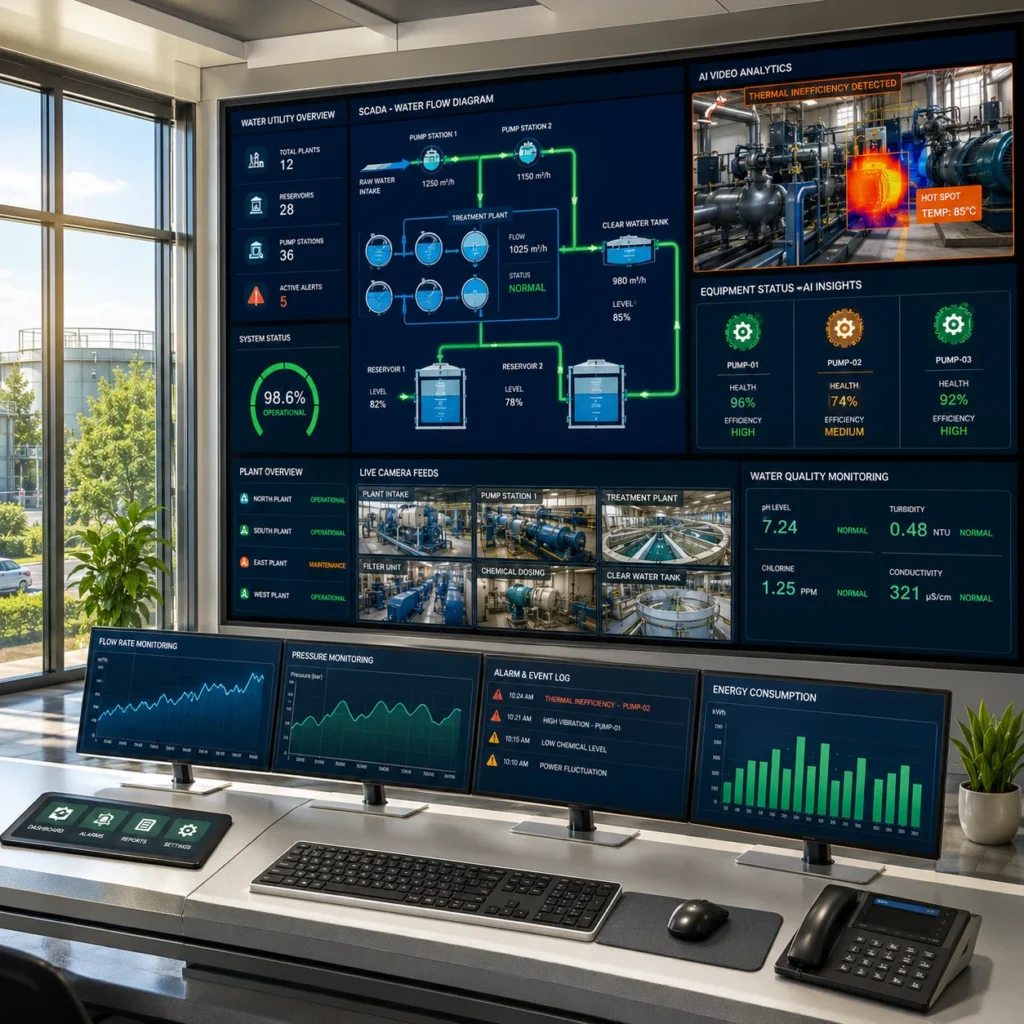
Rather than treating energy management as a standalone engineering function, a leading utility operator sought to establish enterprise-wide Operational Energy Intelligence by combining SCADA, AI Video Analytics, Computer Vision, Industrial IoT, and enterprise analytics. The objective was to improve energy efficiency, optimise process performance, and strengthen operational decision-making without replacing existing control systems. SPGS implemented an intelligent operational platform that transformed real-time operational data into actionable business intelligence, enabling continuous energy optimisation, improved process stability, and enterprise-wide operational governance.
Customer Profile
Industry section: Water Utilities, Process Utilities, and Power Generation (Anonymous)
Operational Scale
- Multiple utility facilities
- Central control room
- SCADA-controlled operations
- Industrial IoT infrastructure
- Enterprise-wide operational monitoring
- Continuous 24×7 operations
Operational Environment
Utility operations depend on the continuous coordination of equipment, process control systems, energy distribution networks, field operators, and maintenance activities. Although SCADA systems provide extensive process visibility, they often operate independently from visual operations, workforce activities, equipment behaviour, and enterprise business systems. The organisation required a unified operational framework capable of improving energy performance while maintaining reliable utility operations.
Business Challenges
The organisation identified several operational priorities:
- Limited visibility into energy utilisation across operational processes.
- Difficulty identifying the operational causes of excessive energy consumption.
- Delayed recognition of process inefficiencies.
- Limited coordination between operations, maintenance, and energy management teams.
- Reactive optimisation of utility operations.
- Difficulty standardising energy performance across multiple facilities.
Project Objectives
The transformation programme focused on:
- Improving enterprise energy visibility.
- Optimising process performance.
- Strengthening operational energy governance.
- Reducing avoidable energy losses.
- Integrating operational and visual intelligence.
- Supporting enterprise-wide decision-making.
Establishing a scalable Operational Energy Intelligence platform
SPGS Operational Energy Intelligence Platform
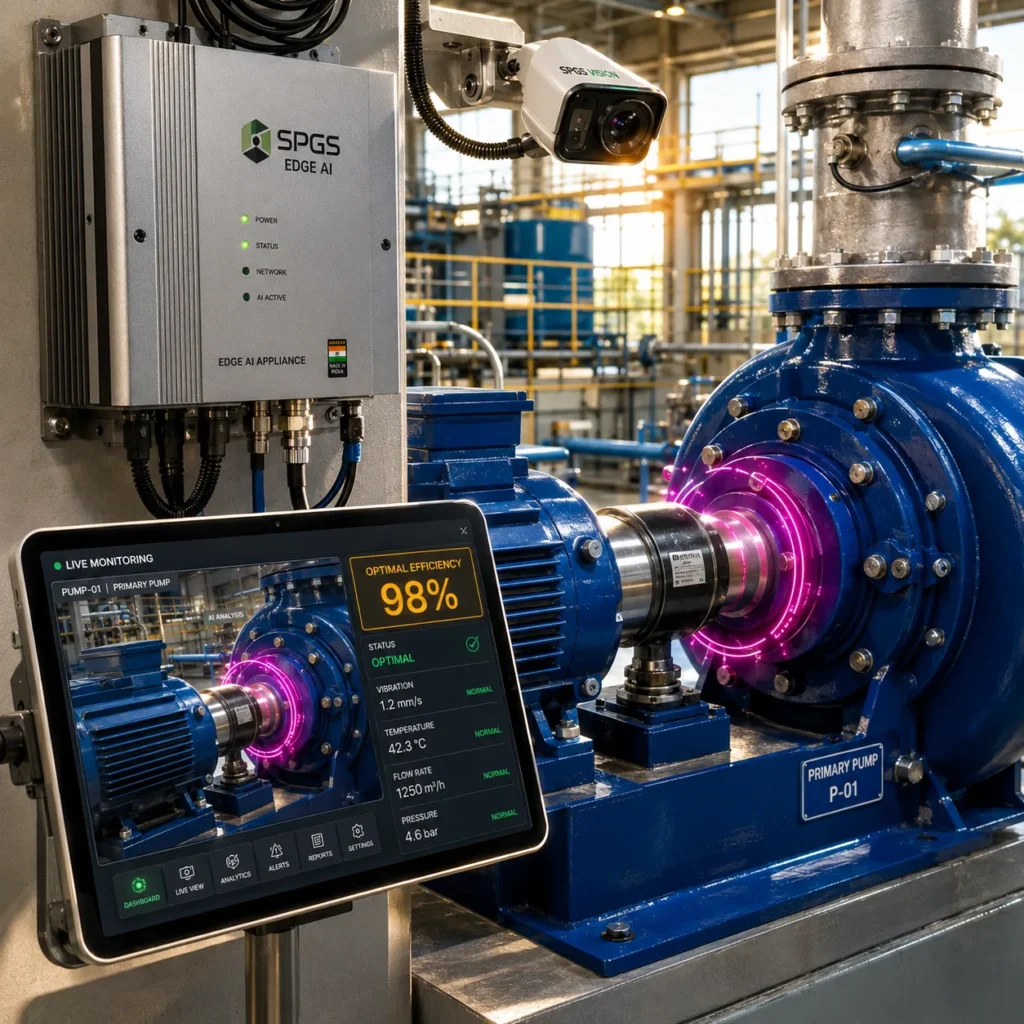
SPGS implemented an enterprise platform integrating SCADA, Edge AI, AI Video Analytics, Computer Vision, Industrial IoT, Cloud AI, and enterprise dashboards. Existing operational systems were enhanced with intelligent analytics that continuously evaluated process behaviour, equipment performance, workforce activities, and operational conditions. The platform enabled operational teams to identify energy inefficiencies, optimise process performance, and improve enterprise-wide operational coordination.
Solution Architecture
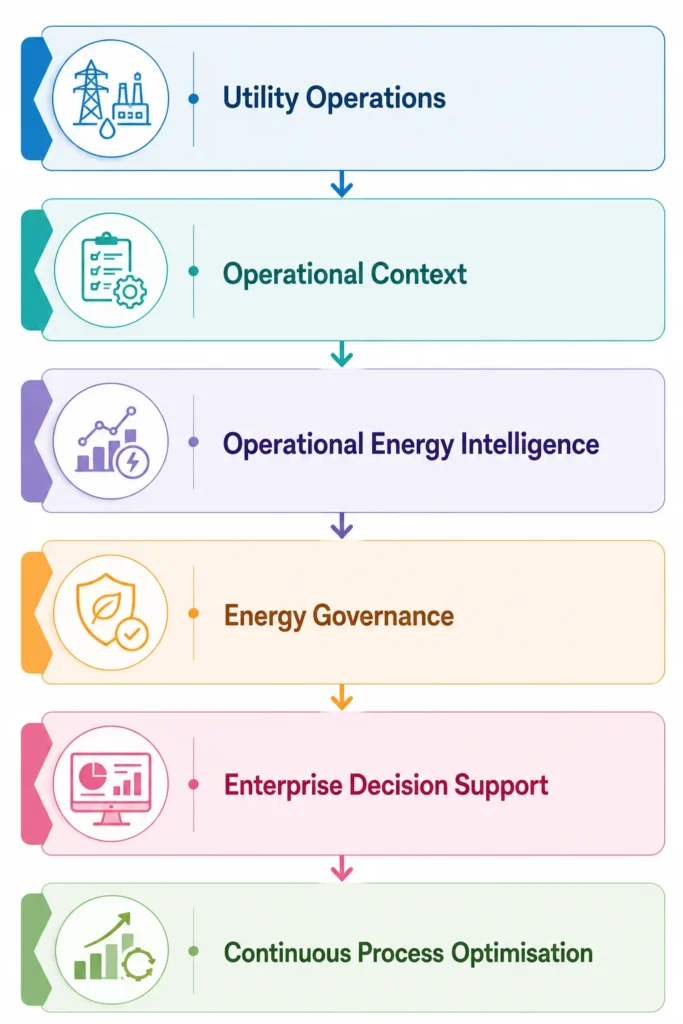
Operational Flow
Operational Technology Ecosystem
Technology | Business Contribution |
SCADA | Process monitoring and operational control |
Industrial IoT | Equipment condition and energy measurements |
AI Video Analytics | Operational activity awareness |
Computer Vision | Visual process intelligence |
Edge AI | Local operational decision support |
Cloud AI | Enterprise-wide analytics |
PLC | Equipment execution context |
MQTT & OPC UA | Industrial communication |
ERP | Business planning and reporting |
NVIDIA Jetson | Edge processing |
Intel OpenVINO, TensorRT & ONNX Runtime | AI optimisation |
Operational Decision Intelligence
Rather than monitoring individual alarms, the platform continuously supported business decisions by answering questions such as:
- Which operations consume the most energy?
- Where are process inefficiencies developing?
- Are utility systems operating within expected parameters?
- Which operational conditions increase energy demand?
- Which teams should respond?
What actions will improve process efficiency
Implementation Methodology
The deployment followed a structured operational transformation programme consisting of operational assessment, utility process analysis, infrastructure evaluation, AI model configuration, SCADA and Industrial IoT integration, pilot validation, enterprise rollout, and continuous optimisation. This phased approach ensured reliable deployment while maintaining uninterrupted utility operations.
Enterprise Integrations
The platform integrated seamlessly with:
System | Business Contribution |
SCADA | Process behaviour |
PLC | Equipment operations |
ERP | Business reporting |
CMMS | Maintenance planning |
Industrial IoT | Energy and equipment data |
MQTT & OPC UA | Industrial communication |
REST APIs | Enterprise integration |
Business Outcomes
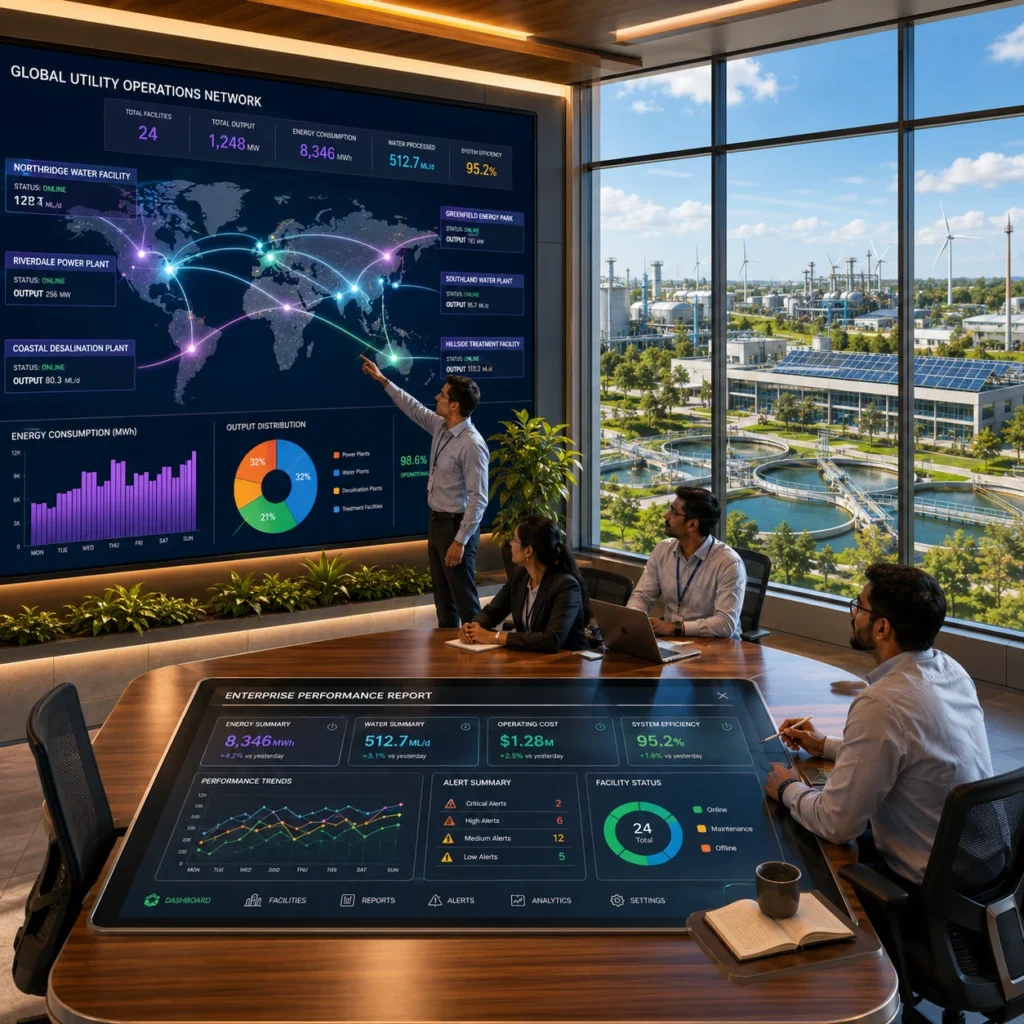
The organisation established Operational Energy Intelligence across utility operations, delivering:
- Improved energy efficiency.
- Better process optimisation.
- Faster operational decision-making.
- Improved coordination between operations and maintenance.
- Enterprise-wide energy governance.
- Reduced operational inefficiencies.
- Improved process stability.
- Standardised operational practices across facilities.
ROI & Business Value
The greatest value came from improving operational decisions rather than simply reducing energy consumption. Better utilisation of existing infrastructure, faster identification of process inefficiencies, improved maintenance planning, stronger cross-functional coordination, and enhanced operational resilience created long-term business value while providing a scalable foundation for future utility modernisation.
Lessons Learned
The project demonstrated that sustainable energy efficiency depends on understanding operational behaviour rather than monitoring energy consumption alone. By combining SCADA with AI-driven operational intelligence, the organisation transformed energy management into an enterprise capability that continuously improves process performance, operational governance, and long-term organisational efficiency.
Future Roadmap
The organisation plans to expand Operational Energy Intelligence through:
- Digital Twins
- Predictive Energy Analytics
- Vision-Language Models
- Enterprise AI Copilots
- Autonomous Process Optimisation
Carbon and Sustainability Intelligence
Related Industry Pages
- Power Generation
- Water & Wastewater Utilities
- Oil & Gas Utilities
- Process Manufacturing
- Smart Utility Operations
Related Technology Pages
- SCADA Integration
- Edge AI
- AI Video Analytics
- Computer Vision
- Industrial IoT
- Operational Intelligence
- Enterprise AI Dashboards
Contact SPGS
SPGS helps utility operators establish Operational Energy Intelligence by integrating SCADA, AI Video Analytics, Computer Vision, Industrial IoT, and enterprise operational systems into a unified decision-support platform. This enables organisations to improve energy efficiency, optimise operational performance, strengthen governance, and build resilient utility operations capable of continuous improvement.