
AI Monitoring for Retail Loss Prevention
Retail Asset Intelligence
Retail profitability depends on more than sales performance alone. Every product displayed, stocked, moved, or sold represents a business asset that must be protected throughout the retail journey. Inventory shrink, unauthorised merchandise movement, operational errors, and organised retail crime can gradually erode profitability without being immediately visible to store management. Retail Asset Intelligence establishes a continuous understanding of store activities, merchandise movement, and operational behaviour, enabling retailers to identify emerging risks, improve store governance, and protect business value. AI Monitoring supports this approach by providing timely operational awareness while preserving a safe and seamless shopping experience.

Executive Summary
A national retail organisation operating multiple stores sought to reduce inventory shrink and improve operational oversight without affecting customer experience. Existing CCTV systems provided incident recordings, but identifying unusual merchandise movement, organised retail theft, and operational irregularities depended largely on manual monitoring and post-incident investigations.
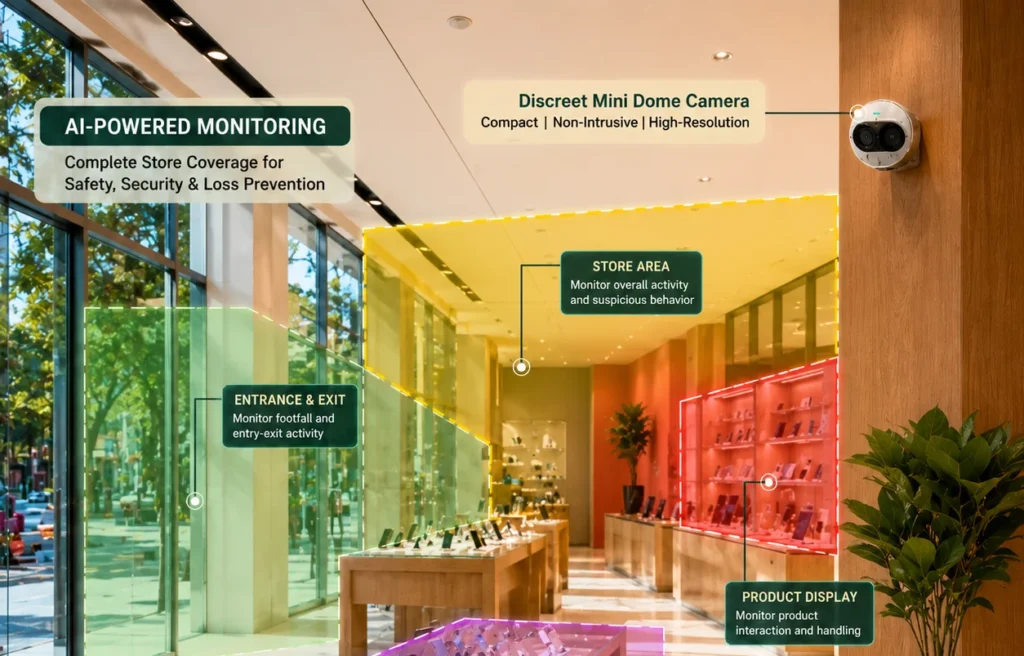
SPGS helped the retailer establish Retail Asset Intelligence by introducing AI Monitoring across key store areas, including entrances, exits, product displays, checkout zones, and high-value merchandise sections. The initiative improved operational awareness, enabled earlier intervention, and strengthened inventory protection while supporting efficient store operations.
Customer Profile
Industry: Retail (Anonymous)
Project Scope
- Multi-store retail operations
- High-value merchandise protection
- Checkout and billing areas
- Customer entrances and exits
- Stock replenishment zones
- Central retail monitoring
- Continuous 24×7 operational oversight
Operational Environment
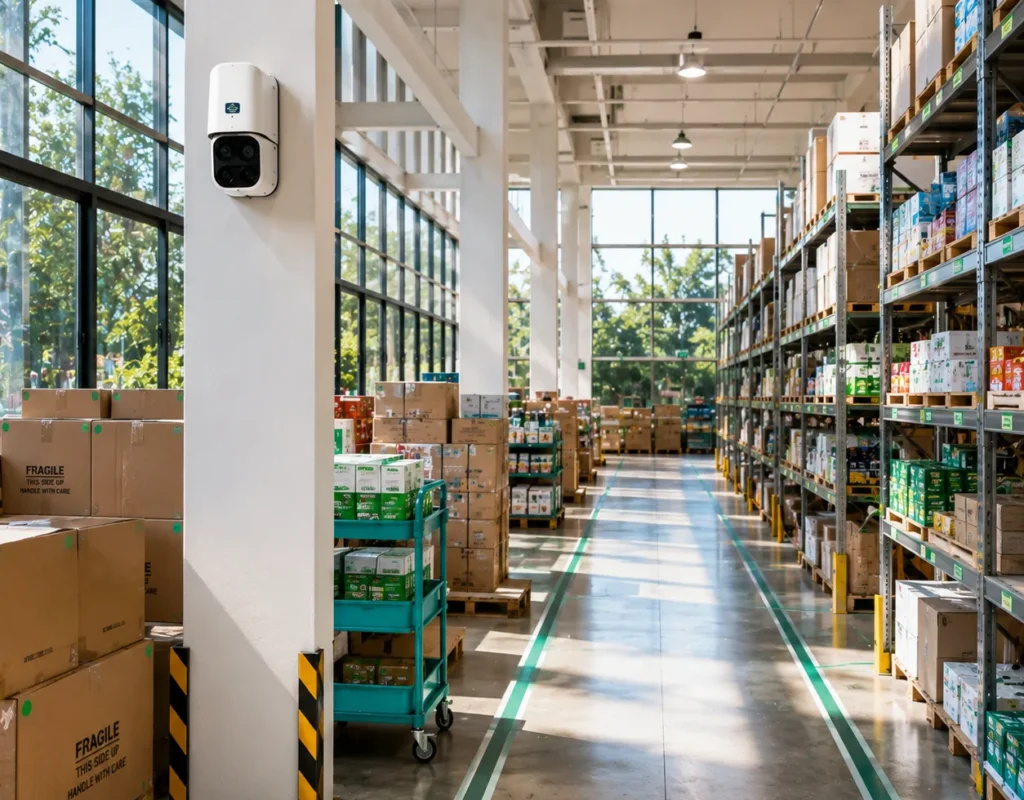
Retail operations involved continuous customer movement, merchandise replenishment, billing transactions, promotional displays, and inventory handling throughout the trading day. While store operations were supported by CCTV, POS systems, and inventory management software, identifying operational situations that could contribute to inventory loss or affect store performance remained a significant challenge, particularly during peak shopping periods.
Business Challenges
- Inventory shrink affecting profitability.
- Limited visibility into merchandise movement.
- Difficulty identifying organised retail theft.
- Delayed response to suspicious store activities.
- Protection of high-value product displays.
- Maintaining customer experience while strengthening store security.
- Improving operational awareness across multiple retail locations.
Project Objectives
- Reduce inventory shrink.
- Improve protection of retail assets.
- Strengthen store operational awareness.
- Improve response to loss-related events.
- Support efficient store management.
- Improve consistency across retail locations.
- Establish a Retail Asset Intelligence framework.
Protecting Value Throughout the Shopping Journey
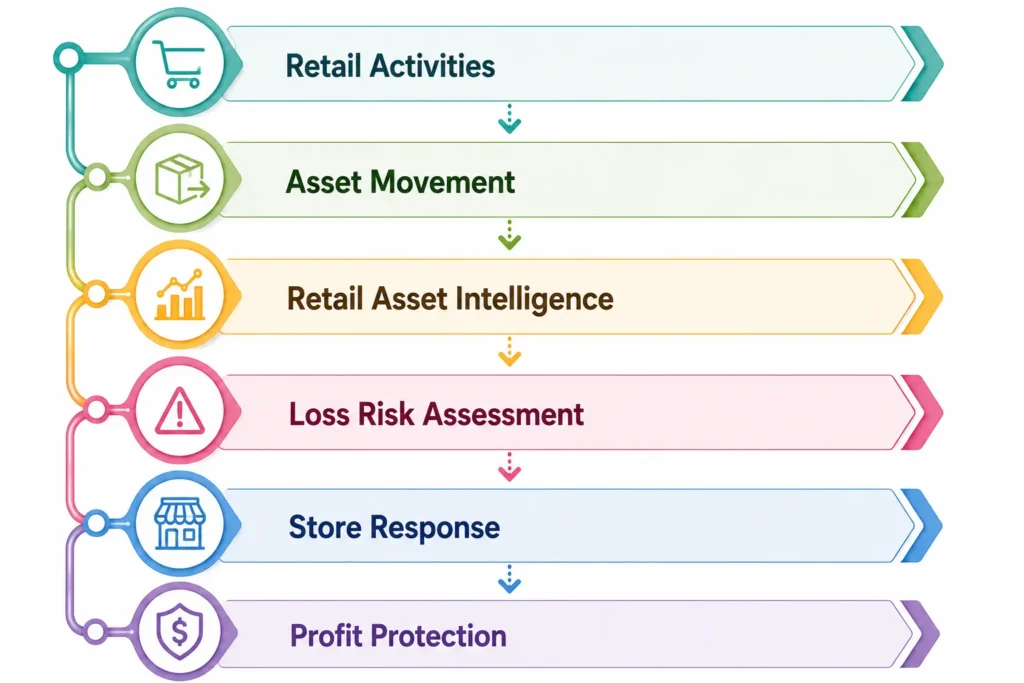
The project focused on understanding how merchandise, customers, and operational activities interacted throughout the retail environment rather than concentrating solely on theft detection. Product displays, shopping aisles, checkout counters, stock movement, and store exits were observed as connected business processes, allowing store teams to recognise unusual situations earlier, improve operational coordination, and reduce avoidable inventory losses without interrupting normal shopping experiences.
Solution Architecture
Operational Flow
Operational Technology Ecosystem
Technology | Business Contribution |
AI Monitoring | Continuous observation of retail operations |
Computer Vision | Understanding merchandise and customer interactions |
AI Video Analytics | Identification of unusual operational activities |
Edge AI | Immediate operational analysis within stores |
POS Integration | Transaction verification and event correlation |
Inventory Management System | Merchandise movement context |
Enterprise AI Dashboard | Multi-store operational visibility |
REST APIs | Enterprise system integration |
Operational Decision Intelligence
The solution supported retail operations by answering practical business questions:
- Which store areas show increasing inventory risk?
- Are unusual merchandise movement patterns developing?
- Which product categories require additional attention?
- Which events require immediate store intervention?
- Are checkout activities aligned with expected transactions?
- Which stores require additional operational support?
- Where can process improvements further reduce inventory shrink?
Implementation Methodology
The programme began with an assessment of store layouts, customer movement patterns, merchandise placement, and existing operational procedures. High-risk retail zones, including entrances, exits, checkout areas, stock rooms, and premium product displays, were prioritised for phased deployment. Operational teams validated detection rules and response procedures to ensure that monitoring supported everyday retail activities while improving inventory protection and store governance.
Enterprise Integrations
System | Business Contribution |
POS System | Transaction context |
Inventory Management System | Stock movement information |
ERP | Business reporting |
Enterprise AI Dashboard | Retail performance visibility |
Access Control | Staff-only area management |
REST APIs | Enterprise interoperability |
Business Outcomes
- Reduced inventory shrink.
- Improved protection of high-value merchandise.
- Faster identification of loss-related events.
- Better coordination between store and security teams.
- Improved operational awareness across retail locations.
- Stronger store governance.
- Better utilisation of retail staff.
- Improved profitability through reduced avoidable losses.
.
ROI & Business Value
The initiative strengthened retail performance by reducing avoidable inventory losses while improving operational efficiency across multiple stores. Earlier identification of unusual merchandise movement, better coordination between operational teams, and more effective protection of high-value products contributed to improved profitability without disrupting the customer shopping experience.
Future Roadmap
The retailer plans to expand Retail Asset Intelligence through:
- Self-Checkout Monitoring
- AI Customer Journey Analytics
- Shelf Availability Intelligence
- Predictive Retail Risk Analytics
- Vision-Language Models
- Enterprise Retail Performance Dashboards
Related Industry Pages
- Supermarkets & Hypermarkets
- Department Stores
- Consumer Electronics Retail
- Jewellery Retail
- Fashion & Apparel
- Pharmacy & Healthcare Retail
Related Technology Pages
- AI Monitoring
- Computer Vision
- AI Video Analytics
- Edge AI
- Retail Analytics
- Intelligent CCTV Monitoring
- Enterprise AI Dashboards
Contact SPGS
Retail organisations face growing pressure to reduce inventory shrink while maintaining an exceptional customer experience. SPGS helps retailers strengthen store operations through AI Monitoring, Computer Vision, AI Video Analytics, and intelligent retail analytics that enhance merchandise protection, improve operational awareness, and support consistent retail performance across single stores and multi-location retail networks.