
The Future of Workplace Safety Through AI-Based PPE Detection and Behaviour Analytics
Safety programs are often evaluated by the number of reported incidents, completed inspections, or compliance audits. While these measurements remain important, they rarely explain how everyday workplace behaviours influence long-term safety performance. Two facilities may report similar incident rates, yet one consistently follows safe work practices while the other depends heavily on corrective actions after problems occur.
This difference highlights an important shift in workplace safety. Organizations are increasingly recognizing that lasting safety improvements come from understanding operational behaviours rather than reacting only to individual incidents. AI-Based PPE Detection and Behaviour Analytics support this transition by helping enterprises observe workplace practices continuously and identify patterns that influence safety culture.
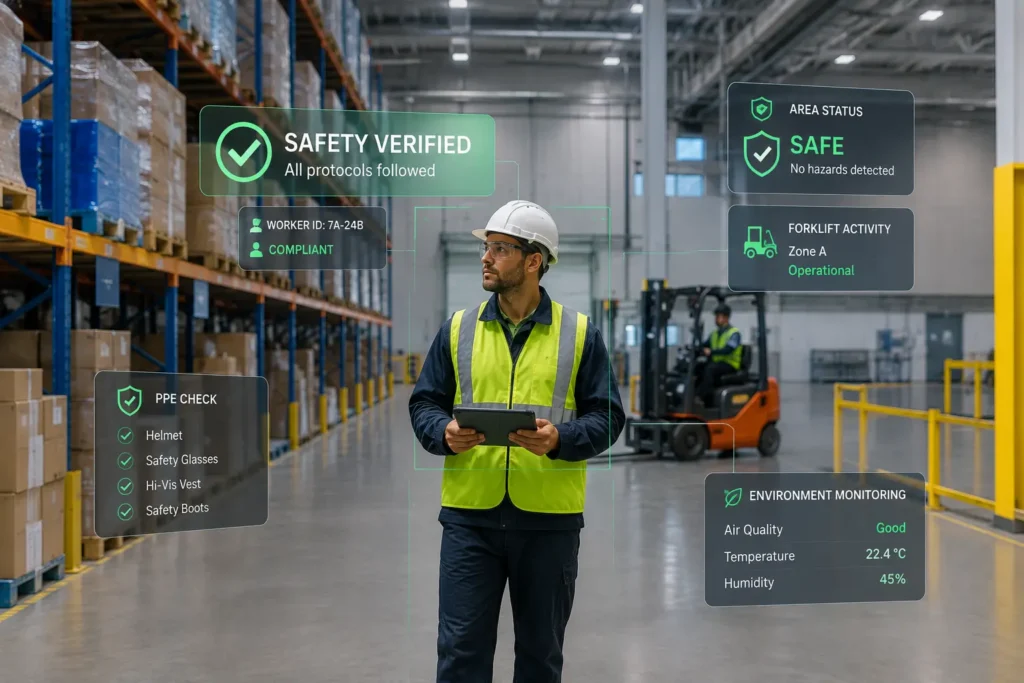
Safety Is Built Through Everyday Behaviours
Every shift involves hundreds of routine actions—entering work areas, operating machinery, using protective equipment, following standard procedures, and interacting with co-workers. Most of these activities occur without incident, yet together they shape the overall safety environment.
Individual Events Rarely Tell the Complete Story
A missing helmet or an unsafe movement may appear as an isolated violation. However, when similar behaviours occur repeatedly in the same location, during particular shifts, or around specific tasks, they indicate broader operational patterns rather than individual mistakes.
Understanding these patterns helps organizations focus on improving work practices instead of only addressing isolated observations.
Safe Behaviour Reflects Operational Consistency
Consistent use of PPE, adherence to defined work zones, and proper execution of procedures often indicate that operational processes are functioning effectively. Behaviour Analytics helps organizations evaluate these trends over time rather than relying solely on periodic inspections.
Different Teams Learn Different Safety Lessons
Safety information is valuable across multiple business functions, not only within health and safety departments.
Operations Teams
Operations managers can evaluate whether production activities consistently align with established Workplace Safety procedures while maintaining operational efficiency.
Safety Managers
Behaviour Analytics helps identify recurring patterns that may require training, process adjustments, or additional workplace guidance instead of focusing exclusively on isolated violations.
Executive Leadership
Leadership teams gain broader visibility into how safety performance evolves across facilities, enabling more informed decisions about workforce development, operational policies, and resource allocation.
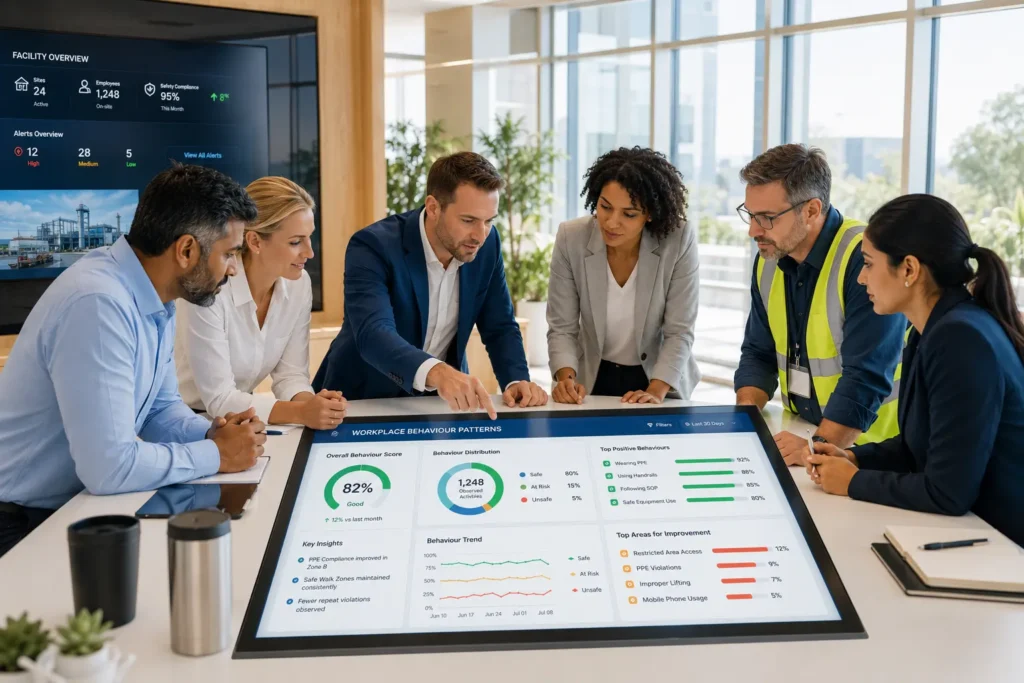
Moving from Compliance Records to Behaviour Insights
Traditional safety management primarily documents completed inspections, audit findings, and reported incidents. AI-Based PPE Detection expands this approach by creating continuous visibility into how safety procedures are followed during everyday operations.
Safety Management Perspective | Traditional Approach | AI-Based Behaviour Analytics Perspective |
PPE Compliance | Periodic inspections | Continuous observation of PPE usage trends |
Workplace Behaviour | Incident-based reviews | Ongoing evaluation of behavioural patterns |
Safety Improvement | Corrective actions after findings | Identification of recurring opportunities for improvement |
Operational Learning | Individual incident reports | Long-term understanding of workplace practices |
Rather than replacing existing safety programs, Behaviour Analytics adds another layer of understanding that supports continuous improvement.
Different Teams Learn Different Safety Lessons
Safety information is valuable across multiple business functions, not only within health and safety departments.
Operations Teams
Operations managers can evaluate whether production activities consistently align with established Workplace Safety procedures while maintaining operational efficiency.
Safety Managers
Behaviour Analytics helps identify recurring patterns that may require training, process adjustments, or additional workplace guidance instead of focusing exclusively on isolated violations.
Executive Leadership
Leadership teams gain broader visibility into how safety performance evolves across facilities, enabling more informed decisions about workforce development, operational policies, and resource allocation.
Creating a Learning Environment Instead of a Monitoring Environment
AI-Based PPE Detection is often associated with identifying non-compliance. However, its long-term value lies in helping organizations learn how workplace behaviours change over time.
By combining AI Video Analytics, Computer Vision, Operational Intelligence, and AI Dashboards, enterprises can understand where safety improvements are sustained, where procedures require reinforcement, and which operational changes produce measurable improvements.
This approach encourages continuous learning rather than simply increasing the number of safety observations.
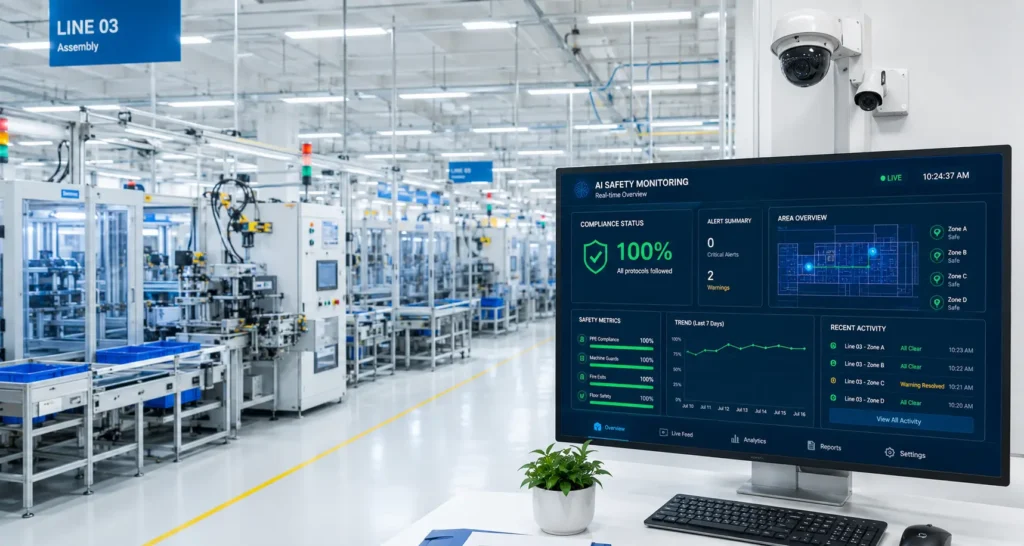
Supporting Safer Operations Through Better Understanding
- Workplace safety is increasingly integrated with Smart Manufacturing, Industrial AI, Enterprise AI, Compliance Monitoring, Intelligent CCTV Monitoring, and Digital Transformation initiatives.
- Safety performance is closely linked to overall operational efficiency and business outcomes.
- AI-Based PPE Detection provides continuous visibility into PPE usage and compliance.
- Behaviour Analytics helps monitor how workers interact with equipment and their environment.
- These technologies offer insights into adherence to operational procedures.
- Improved visibility supports proactive safety management and risk reduction.
- Enhanced coordination between production, quality, and safety teams leads to more consistent operations.
Building Safety Through Operational Habits
The future of workplace safety will depend not only on stronger regulations or additional inspections but also on how well organizations understand the behaviours that shape daily operations. AI-Based PPE Detection and Behaviour Analytics enable enterprises to view safety as an evolving operational habit rather than a series of isolated compliance events.
By recognizing behavioural trends, supporting continuous learning, and encouraging consistent work practices, organizations can strengthen Workplace Safety while creating environments where safer decisions become part of everyday operations rather than exceptional responses.
FAQ
How does AI-Based PPE Detection differ from manual safety inspections?
Manual inspections provide periodic observations, whereas AI-Based PPE Detection supports continuous visibility into PPE usage and workplace practices throughout daily operations.
What is the role of Behaviour Analytics in workplace safety?
Behaviour Analytics helps identify recurring work patterns, enabling organizations to understand how everyday activities influence long-term safety performance.
Can Behaviour Analytics improve safety training programs?
Yes. By revealing recurring behavioural trends, organizations can design training initiatives that address common workplace practices instead of focusing only on isolated incidents.
Which industries can benefit from AI-Based PPE Detection?
Manufacturing, logistics, construction, energy, warehousing, and other operationally intensive industries can use AI Video Analytics and Behaviour Analytics to strengthen Workplace Safety initiatives.
Does AI-Based PPE Detection replace human safety managers?
No. It supports safety professionals by providing additional operational insights while keeping human expertise central to workplace safety decisions.